
Stories that grew
Distinguish a contradicted claim from a story lacking independent confirmation.
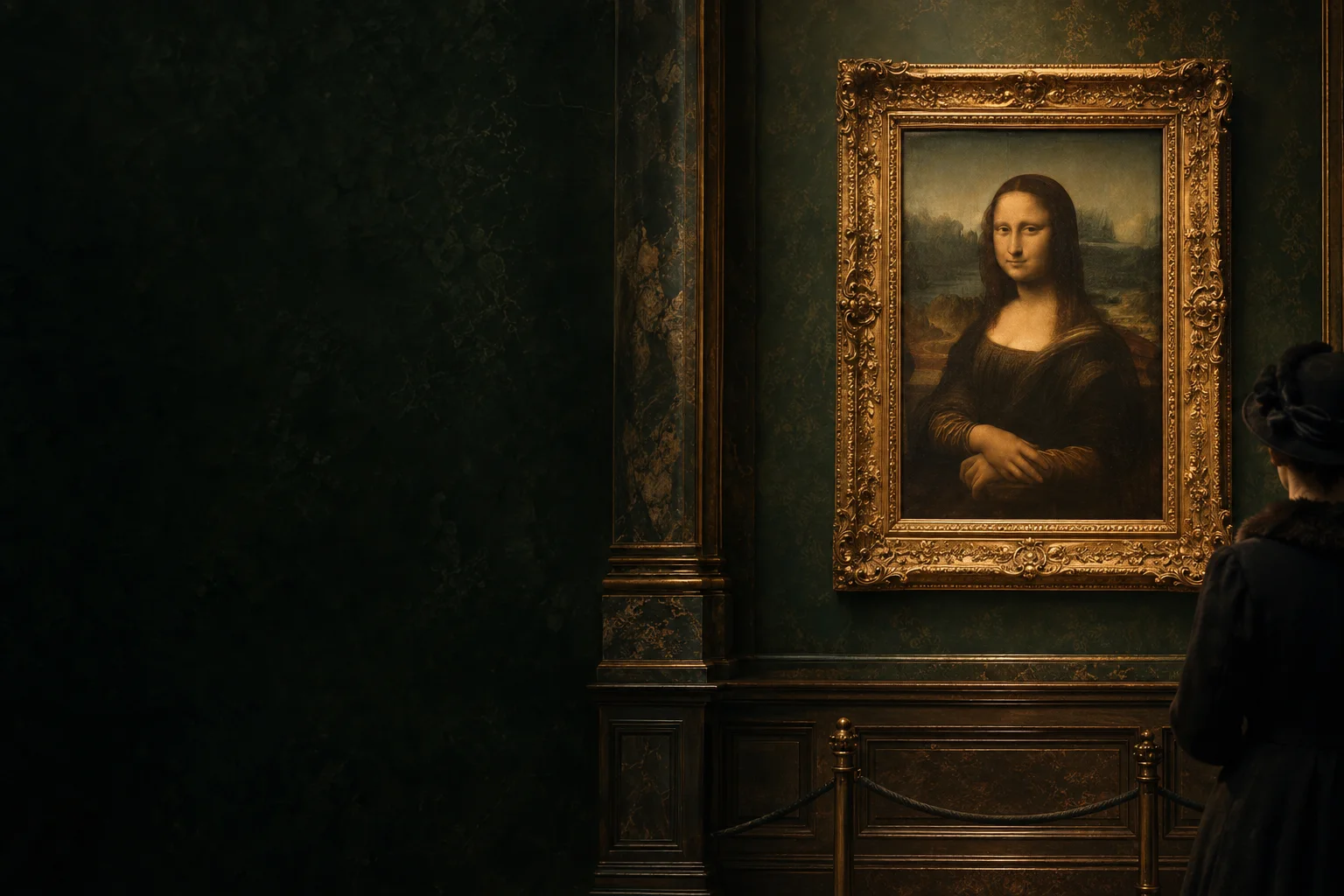
Read the storyEditorial illustration · not a historical source
Follow the evidence, beyond the frame.
Mission 5 · 6–12 minutes
Start the case
No account needed. Your work is saved in this browser; sign in any time to keep it in your account.
In 1932, a magazine article offered a different explanation for the Mona Lisa theft. Journalist Karl Decker told a story about Eduardo de Valfierno and a scheme involving copies of the painting. In that account, stealing the real work would help make false versions seem believable to buyers. It gave the crime a larger plan and another person behind it. The article appeared in The Saturday Evening Post long after the painting had disappeared in 1911 and returned to the Louvre on 4 January 1914. Decker said he had heard the story from Valfierno. Yet the explanation rests on that article, without external confirmation. An account can exist without the events it describes being established. Naming a mastermind and a scheme is not the same as showing independent evidence that either directed Peruggia. The story has a clear appeal: it makes a theft into a plan for selling copies. But a neatly connected explanation must still be checked. If the same article is repeated in another book or retelling, that repetition is not a new witness. Many versions can lead back to one starting point. To strengthen the explanation, a second, independent record would need to connect the alleged scheme to the actual theft. Compare that uncertainty with a different statement: the Mona Lisa was never recovered. This is not merely an unanswered question. The painting was exhibited at the Uffizi and returned to the Louvre. The statement conflicts with events described in the recovery history. It can be rejected without pretending that every disputed part of the case has been solved. These two claims need different answers. The forgery scheme is not established by independent confirmation in the accounts consulted here. Permanent disappearance is contradicted by the recovery and return. Calling both simply unknown would hide a fact we do have; calling both false with certainty would go beyond the evidence about the scheme. The theft and return also helped bring the Mona Lisa wider attention. Fame can carry well-supported history and doubtful stories together. That makes the ending of this case more than the recovery of an object. The painting came back, while explanations of what happened continued to grow around it.
Words and phrases in context
Return to the sources
Sources and limits
Wikipedia: Mona Lisa
reference · Modern reference article; checked 2026-10-03
Wikipedia: Mona Lisa (new tab)A revisable reference synthesis, not a contemporary witness statement. Conflicting details are logged in the case research file.
Wikipedia: Vincenzo Peruggia
reference · Modern reference article; checked 2026-10-03
Wikipedia: Vincenzo Peruggia (new tab)A revisable reference synthesis, not a contemporary witness statement. Conflicting details are logged in the case research file.
Archivio di Stato di Firenze: I tentativi di vendita del dipinto
institutional · Modern exhibition page; documents dated 5 October/25 November 1913 and 2 April 1914.
Archivio di Stato di Firenze: I tentativi di vendita del dipinto (new tab)Exhibition summaries refer to interrogation records and letters. Reported motives remain attributed claims, not independent proof. Scans are not reproduced. Not cited by the current English or French text; the story uses the specified Wikipedia sections.